
When people think about construction materials, they usually focus on concrete, lumber, bricks, or roofing. Fasteners rarely get much attention. Yet screws and anchors are often the components that determine whether a project remains secure for years or starts causing problems after a few months.
Choosing the right fastener isn’t just about picking a screw that fits a hole. Different materials require different fastening methods, and using the wrong product can lead to loose connections, damaged surfaces, and unnecessary repair costs.
At SOUTHRO, we work with contractors, builders, and homeowners who need dependable fastening solutions for everyday projects. Understanding the basics of screws and anchors can help you make better decisions and achieve more reliable results.
Why the Right Fastener Makes a Difference
Every material behaves differently. Wood expands and contracts with changes in temperature and humidity. Concrete is dense and rigid. Drywall is lightweight and can crack under excessive load. Metal requires specialized fasteners capable of creating a secure connection without damaging the surface.
Because of these differences, a screw that performs well in one application may fail completely in another.
Using the correct screws and anchors can help:
– Improve structural stability
– Support heavier loads
– Reduce maintenance issues
– Prevent loosening over time
– Increase overall project safety
– Extend the life of the installation
Professional builders understand that successful construction starts with the right materials, and that includes the fasteners holding everything together.
Choosing Screws for Different Materials
Wood Screws
Wood screws remain one of the most commonly used fastening products in construction. Their thread design allows them to grip wooden materials securely while reducing the chance of splitting.
They’re commonly used for framing, decking, fencing, cabinetry, and general woodworking projects.
For outdoor applications, corrosion-resistant screws are usually the best choice because they can withstand moisture and changing weather conditions.
Drywall Screws
Drywall screws are designed specifically for attaching drywall sheets to wood or metal studs. They may look similar to other fasteners, but their design allows for quick installation and a clean finish.
Using standard construction screws instead of drywall screws can lead to poor holding strength and visible surface damage.
Concrete Screws
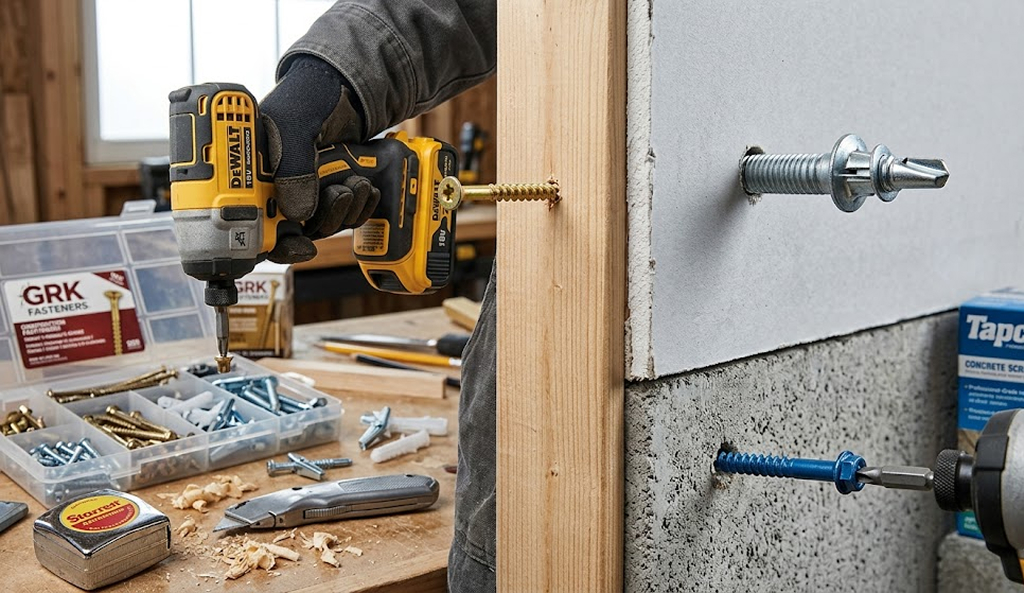
Concrete and masonry surfaces require much stronger fastening solutions than wood or drywall. Concrete screws are designed to cut into the material and create a secure hold without excessive movement.
These fasteners are frequently used for mounting brackets, shelving systems, railings, electrical fixtures, and structural components.
Metal Screws
Working with steel and metal framing requires fasteners that can penetrate hard surfaces without losing strength. Self-tapping screws are often preferred because they create their own threads during installation.
They’re commonly used in commercial construction, industrial facilities, roofing systems, and metal fabrication projects.
Why Anchors Are Sometimes Necessary
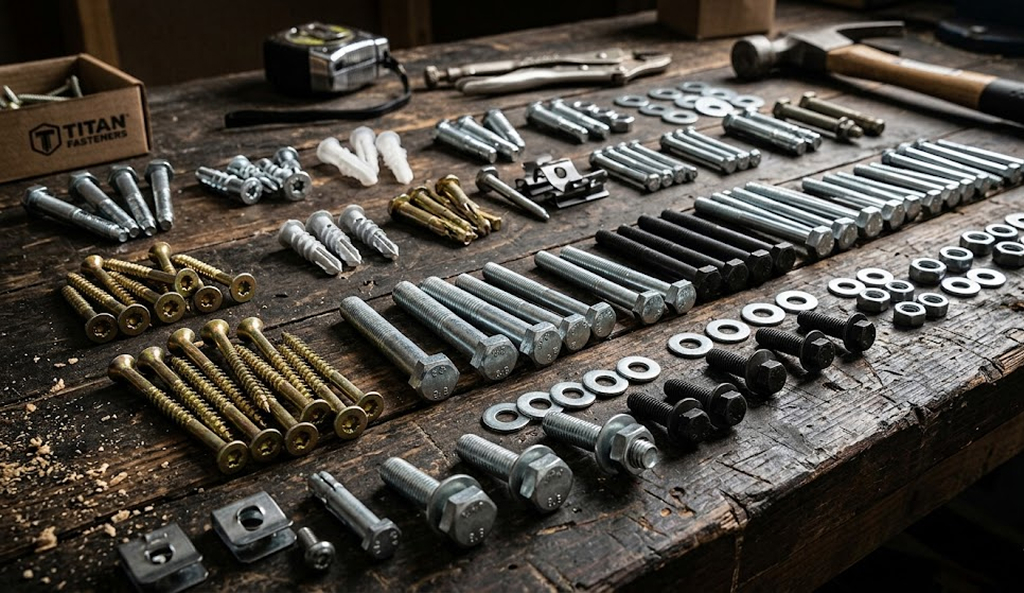
In many situations, a screw alone is not enough. This is especially true when working with drywall, brick, concrete, or hollow materials.
Anchors help distribute the load and create a stronger connection between the fastener and the surface. Without an anchor, a screw may loosen over time or pull out completely under weight.
For example, mounting a heavy shelf directly into drywall without a suitable anchor is one of the most common installation mistakes homeowners make.
The right anchor can significantly increase holding strength and improve long-term reliability.