
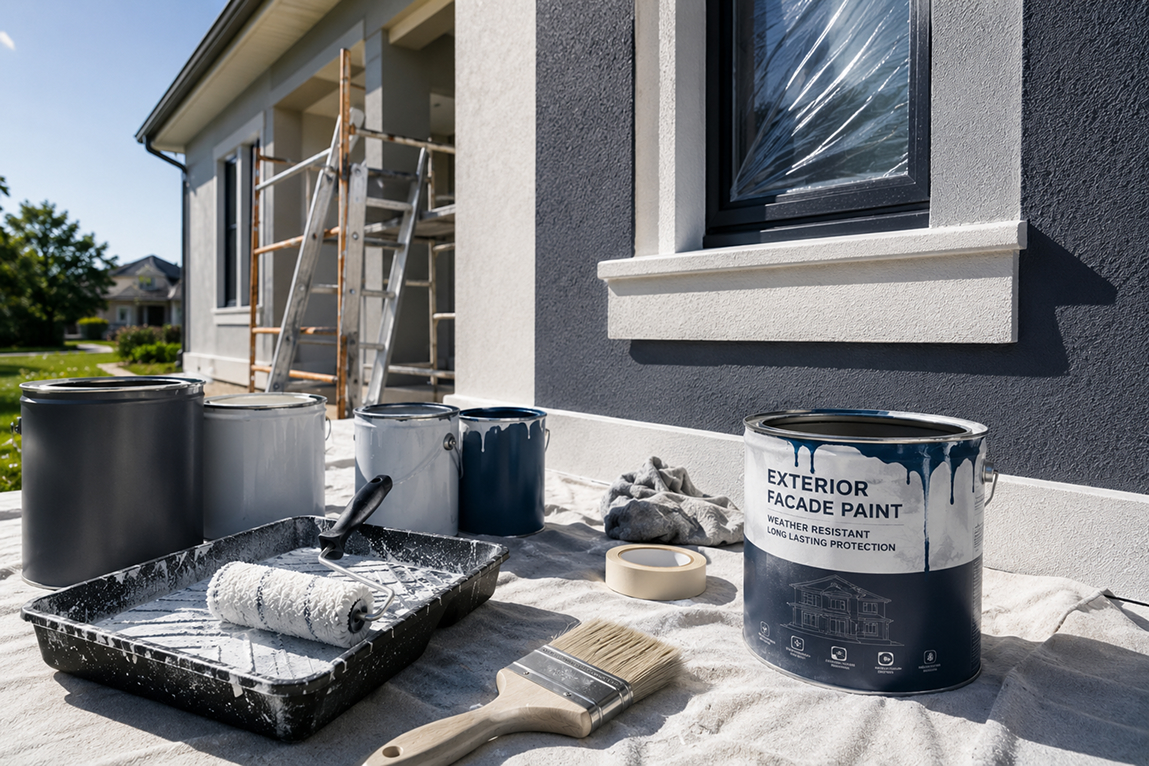

Painting looks simple until you actually start doing it. Open the can, grab a brush or roller, apply the paint, and you’re done. At least, that’s the theory.
In practice, choosing the right painting tool can make a noticeable difference in how quickly you finish the job, how much paint you use, and how good the final surface looks.
Paint rollers and brushes are the two most common tools for applying paint, but they are designed for different types of work. Professional painters rarely choose one over the other for an entire project. Instead, they use each tool where it performs best.
At SOUTHRO, we believe good results start with choosing the right equipment for the job. Here’s how to decide whether you need a paint roller, a brush, or both.
Why Your Painting Tool Matters
The quality of paint is important, but paint alone cannot guarantee a professional finish.
The application tool determines how evenly the paint reaches the surface, how easily you can control edges and corners, and how much time you’ll spend covering larger areas.
Using a small brush to paint an entire room, for example, is possible. It’s also a very efficient way to turn a weekend project into a much longer one.
Using a large roller around window frames, corners, trim, and detailed surfaces creates the opposite problem. The work may move quickly, but precision becomes difficult.
The goal is simple: match the tool to the surface and the task.
When Should You Use a Paint Roller?
Paint rollers are designed primarily for covering large, relatively flat surfaces.
For walls and ceilings, a roller can cover significantly more area with each pass than a standard paint brush. This makes rollers particularly useful for residential renovations, commercial painting, new construction, and other projects where productivity matters.
A quality paint roller also helps distribute paint consistently across the surface.
Paint rollers work especially well for:
- Interior walls
- Ceilings
- Large drywall surfaces
- Concrete walls
- Exterior walls
- Large wooden panels
- Commercial spaces
The type of roller you choose matters as well.
Smooth surfaces generally work better with a shorter roller nap, while textured surfaces require a thicker nap that can reach into small gaps and irregular areas.
Painting brick, rough concrete, or textured masonry with a roller designed for smooth drywall can leave sections poorly covered.
Choosing the Right Roller Nap
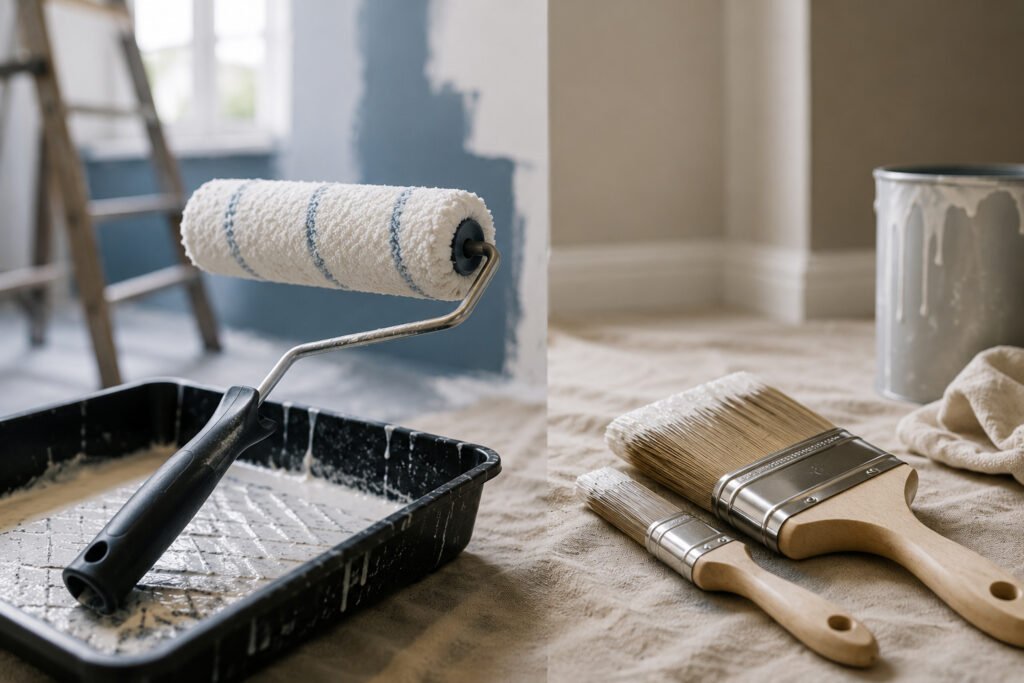
Roller nap refers to the thickness of the material covering the roller.
A shorter nap provides greater control on smooth surfaces and can help produce a cleaner finish. A longer nap holds more paint and reaches deeper into textured surfaces.
For smooth drywall and finished walls, painters generally use shorter naps.
Medium naps are useful for lightly textured walls and many general construction applications.
Rough surfaces such as brick, masonry, and textured concrete often require a thicker roller.
The paint itself should also be considered. Different coatings have different viscosities and application requirements, so always check the paint manufacturer’s recommendations before selecting your roller.
When Should You Use a Paint Brush?
Brushes provide something rollers cannot easily match: control.
A good paint brush allows you to work around edges, corners, frames, trim, fixtures, and other areas where precision is more important than speed.
Paint brushes are particularly useful for:
- Doors and window frames
- Baseboards
- Corners
- Trim
- Small wooden surfaces
- Detailed areas
- Touch-ups
- Cutting in around walls and ceilings
Brushes are also useful when working with surfaces that have unusual shapes or small areas that a roller simply cannot reach.
This is why professional painters usually keep several brush sizes available instead of relying on a single universal brush.
Roller vs. Brush: Which Gives a Better Finish?
There isn’t a universal winner.
On a large, smooth wall, a quality roller will usually provide faster and more consistent coverage.
On detailed woodwork or around a window frame, a brush provides significantly better control.
The final result depends on several factors:
- Surface material
- Surface texture
- Type of paint
- Roller or brush quality
- Preparation
- Application technique
- Temperature and drying conditions
Trying to solve every painting task with the same tool usually creates more work rather than less.
Why Professionals Use Both
Walk onto a professional painting project and you’ll rarely find painters working exclusively with brushes or exclusively with rollers.
A common technique is known as “cutting in.”
The painter first uses a brush to carefully apply paint around corners, ceilings, trim, outlets, windows, and other detailed areas. Once those sections are finished, a roller is used to cover the larger open areas.
This combination offers the precision of a brush and the speed of a roller.
For many interior painting projects, this is the most practical approach.
Surface Preparation Comes First
Even expensive paint and professional painting tools cannot compensate for poor surface preparation.
Before opening the paint can, inspect the surface carefully.
Dust, grease, loose paint, cracks, holes, and uneven areas can all affect adhesion and the final appearance.
Depending on the project, preparation may include:
- Cleaning the surface
- Removing loose or peeling paint
- Filling cracks and holes
- Scraping uneven areas
- Sanding repairs
- Removing dust
- Applying the appropriate primer
This is where tools such as putty knives, scrapers, sanding tools, and preparation accessories become just as important as the roller or brush itself.
A few extra minutes spent preparing a wall can save considerably more time later.
Choosing Quality Painting Tools
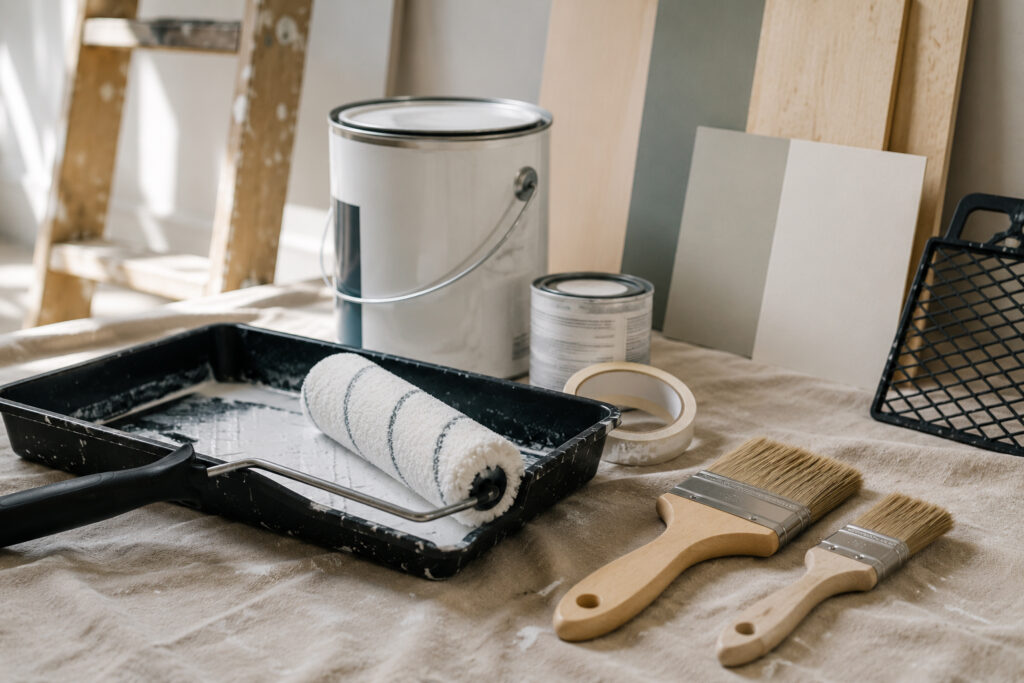
Painting tools are relatively simple products, but their quality still matters.
A poor roller can shed fibers into fresh paint, distribute coating unevenly, or wear out before the project is finished.
Low-quality brushes may lose bristles, create visible marks, and make detailed work unnecessarily difficult.
SOUTHRO focuses on dependable painting and construction tools designed for practical, everyday use. We also work with established paint and coating manufacturers to help contractors, builders, property professionals, and homeowners find suitable products for different applications.
The objective isn’t to make painting complicated. It’s exactly the opposite: use the appropriate products and tools from the beginning so you don’t have to correct avoidable problems later.
Don’t Forget About the Paint
The tool is only one part of the equation.
Interior wall paint, exterior coatings, masonry paint, wood coatings, primers, and protective finishes can all behave differently during application.
Before beginning a project, consider:
- Where the surface is located
- What material you’re painting
- Whether the area is exposed to moisture
- How much traffic or wear the surface receives
- Whether the surface is indoors or outdoors
- What finish you want to achieve
For exterior construction, durability and weather resistance become particularly important.
For interior spaces, coverage, finish, cleaning requirements, and appearance may be higher priorities.
For metal, wood, concrete, and masonry, proper primers and compatible coatings can make a major difference in long-term performance.
Roller or Brush for DIY Projects?
For most home improvement projects, you probably need both.
Use the roller for large areas and the brush for precision work.
If you’re repainting a bedroom, for example, a brush can handle the corners, edges, baseboards, and areas around windows. The roller can then cover the main wall surfaces.
For a small piece of furniture or narrow wooden trim, a roller may not be necessary at all.
Think about the surface before choosing the tool rather than automatically reaching for whatever happens to be closest.
What About Professional Construction Projects?
For contractors, time matters much more.
Painting hundreds or thousands of square feet requires tools that provide consistent coverage without unnecessarily slowing down the crew.
Rollers remain an important choice for large surfaces, while brushes are essential for finishing work and areas requiring greater control.
For very large projects, professional paint sprayers may also become part of the workflow.
The best solution depends on the scale of the project, coating being applied, surface condition, and finish requirements.
Common Painting Mistakes to Avoid
Many disappointing paint jobs have less to do with the paint itself and more to do with preparation and application.
Common mistakes include painting dirty surfaces, skipping necessary primer, choosing the wrong roller nap, overloading a brush with paint, applying another coat too early, or using tools that aren’t suitable for the surface.
Another common mistake is rushing.
Paint needs time to level, dry, and cure according to the manufacturer’s instructions. Applying more paint isn’t always the solution to poor coverage, especially when the underlying problem is incorrect preparation or technique.
A Better Approach to Painting
A successful painting project doesn’t require dozens of specialized tools.
It requires the right ones.
Start by identifying the surface and selecting a compatible paint or coating. Prepare the area properly. Use brushes where control matters and rollers where speed and consistent coverage matter.
For many projects, the answer to “roller or brush?” is simply both.
SOUTHRO provides painting, finishing, and construction tools for professionals and everyday projects, with a focus on durability, practical performance, and straightforward application.
Whether you’re finishing a new construction project, renovating an existing property, or simply giving a room a fresh appearance, the right tools make the work easier and help produce a cleaner, more professional result.
SOUTHRO – Better Tools. Better Finish.