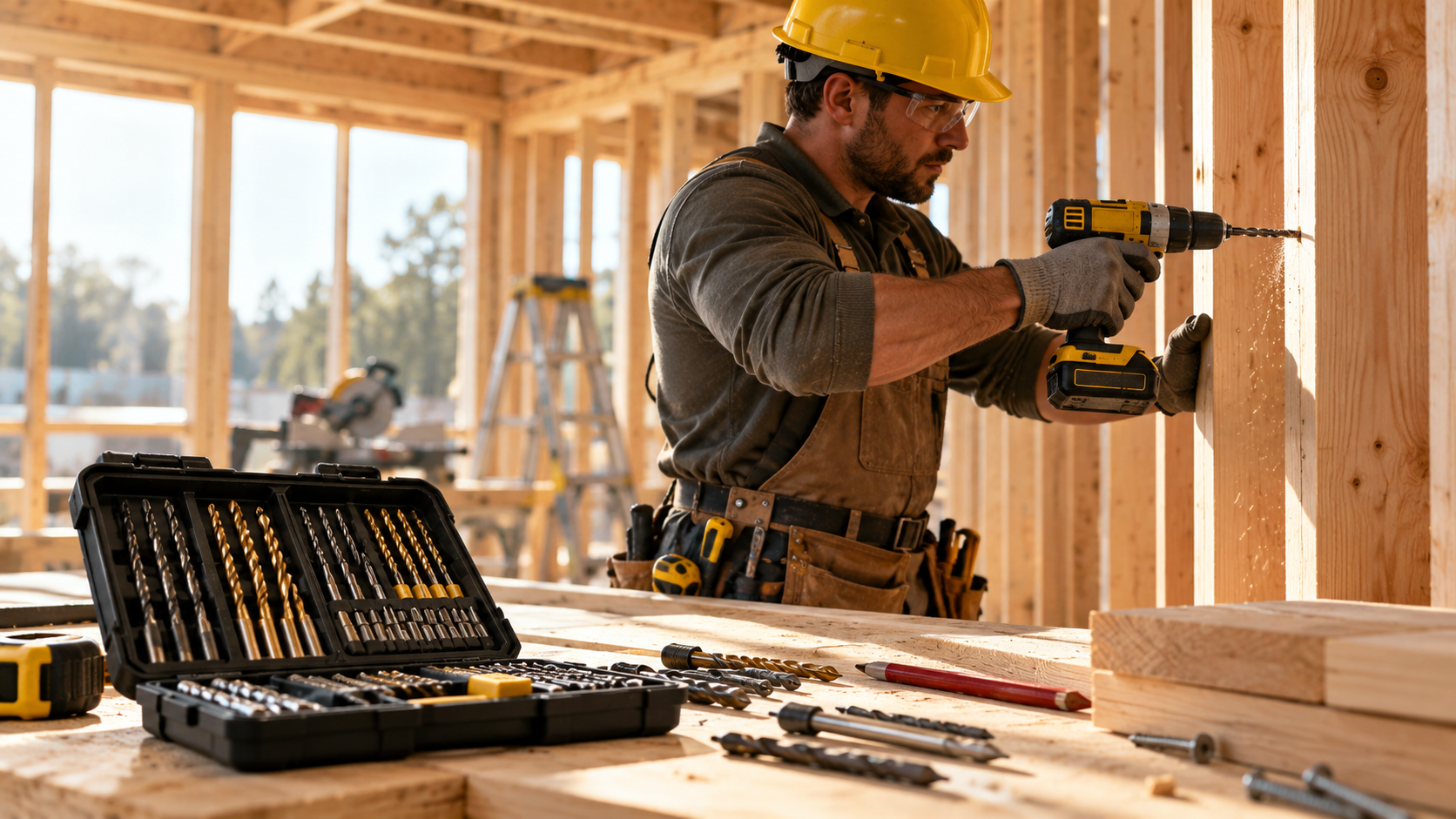

A drill is one of the most useful tools in any workshop, but the drill itself is only half of the equation. The bit you choose determines how cleanly the hole is made, how quickly the work moves, and how much stress you put on the tool and material.
Using the wrong bit can lead to rough holes, burned surfaces, broken fasteners, cracked tile, or unnecessary wear on your equipment. The right bit makes the job more accurate and much easier to control.
Whether you are installing shelves, building a deck, mounting hardware, or tackling a renovation, understanding drill-bit types will help you make better decisions before the first hole is drilled.
At SOUTHRO, we believe dependable results start with matching the tool to the material. Here is a practical guide to choosing drill bits for common projects.
Why the Drill Bit Matters
A drill bit is designed to cut, scrape, or grind through a specific type of material. Its tip shape, flute design, material, and coating all affect the way it removes material from the hole.
A general-purpose bit may work for a simple task, but specialized bits offer better accuracy and a cleaner finish when the job involves hardwood, steel, concrete, or tile.
Choosing a bit based on the surface in front of you is one of the easiest ways to protect both your tools and your project.
Drill Bits for Wood
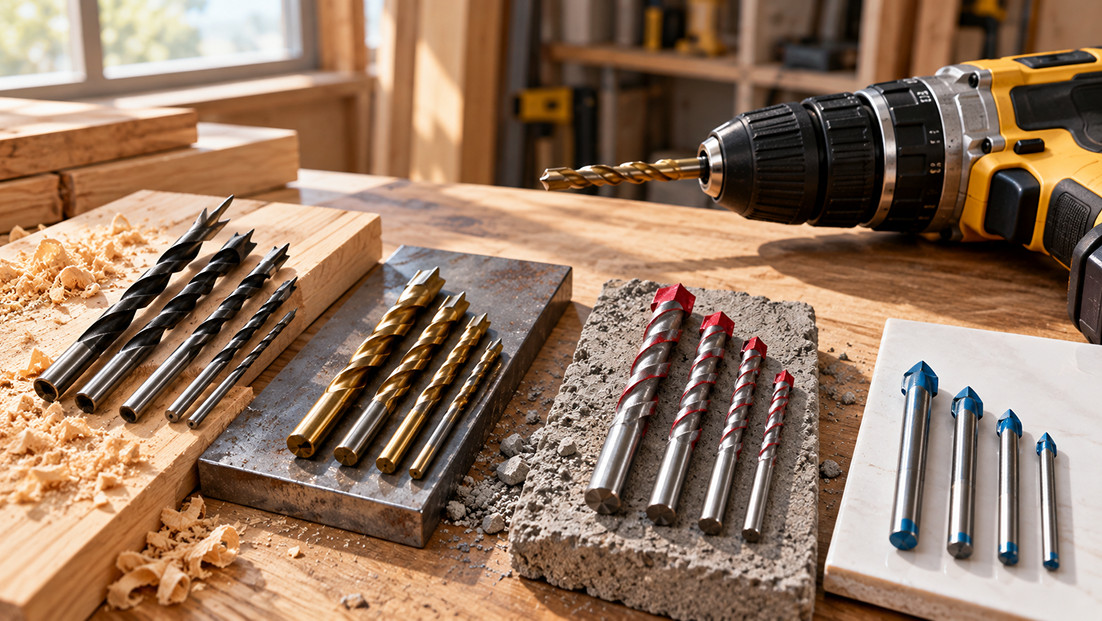
For basic wood drilling, brad-point bits are a reliable choice. Their sharp center point helps keep the bit from wandering, while the outer cutting edges create a clean entry hole in softwood, hardwood, plywood, and many composite panels.
Twist bits can also handle many wood applications, especially when you need a versatile option for pilot holes. For larger, shallow holes, such as those used for cabinet hardware or concealed hinges, Forstner bits produce clean, flat-bottomed results.
Spade bits are useful when speed matters more than a polished finish. They can create wider holes quickly for rough construction work, wiring paths, and utility installations.
When drilling wood, start with a pilot hole before driving a large screw or bolt. This helps reduce the chance of splitting, especially near the edge of a board.
Drill Bits for Metal
Metal requires a bit that can hold its edge under more heat and pressure. High-speed steel, often called HSS, is a common choice for aluminum, mild steel, brass, and other everyday metals.
For tougher metals, cobalt drill bits provide additional heat resistance. They are a strong option when working with stainless steel or harder alloys, provided the drill speed and pressure are controlled.
Use a center punch before drilling into metal whenever possible. The small indentation helps guide the tip and prevents the bit from slipping across the surface at the start of the hole.
A slower speed, steady pressure, and suitable cutting fluid can help reduce heat buildup. If the bit begins to discolor or smoke, pause and let it cool rather than forcing it through the material.
Drill Bits for Masonry and Concrete
Masonry bits are made for brick, block, concrete, and stone. They usually have a reinforced carbide tip designed to withstand the abrasive nature of mineral-based materials.
For light-duty drilling into brick or block, a standard rotary drill with a masonry bit may be enough. Dense concrete and larger holes often call for a hammer drill, which combines rotation with a hammering action that helps break up the material.
Match the hole diameter to the anchor or fastener you plan to use. A hole that is too large can reduce holding strength, while a hole that is too small may make installation difficult or damage the fastener.
Clear dust from the hole before inserting an anchor. This simple step helps the anchor seat more consistently.
Drill Bits for Tile and Glass
Tile and glass demand patience. Standard twist bits can crack a finished surface, so use a spear-point tile bit or a diamond-tipped bit designed for hard, brittle materials.
Begin at a slow speed without hammer action. Use light, consistent pressure and let the bit do the work. A small piece of painter’s tape over the drilling point can help keep the bit from sliding on a smooth glazed surface.
For ceramic tile, drill through the tile first and then switch to a masonry bit if the wall behind it is concrete or brick. Keep the area cool according to the bit manufacturer’s recommendations, particularly when using diamond-tipped accessories.
Choose the Right Bit Size and Shank
The diameter of the bit should match the fastener, anchor, or hardware requirement for the job. When installing screws in wood, a pilot hole is generally smaller than the screw’s outer threads. When using anchors, follow the anchor packaging for the correct diameter.
Also check the shank style. Most standard drill chucks accept round shanks, while some impact drivers use hex-shank bits for quick changes. SDS shanks are designed for compatible rotary hammers used in heavier masonry work.
Making sure the bit fits both the material and the tool prevents a last-minute interruption after the project has already started.
Use the Right Speed and Pressure
The bit is important, but technique matters too. Smaller bits generally use higher speeds, while larger bits and harder materials call for slower, more controlled drilling.
Avoid pressing too hard. Excessive force can overheat a bit, dull its cutting edges, or cause it to bind. Instead, keep the drill aligned, apply steady pressure, and back the bit out occasionally to clear chips and dust.
Secure the workpiece before drilling whenever possible. A clamped board or stable metal piece is safer and gives you a more accurate hole than holding the material by hand.
Keep Your Drill Bits Ready for the Next Job
Drill bits last longer when they are stored properly. A labeled case or organizer keeps edges from knocking together and makes it easier to find the correct size.
After use, wipe away dust and residue. Check bits for dull edges, chips, or discoloration before returning them to storage. Replacing a damaged bit is usually less costly than repairing a surface that was damaged by one.
A well-chosen drill bit gives you better control, cleaner results, and more confidence on every project. SOUTHRO offers construction tools, fasteners, and dependable jobsite essentials to help you select the right equipment and get the work done properly.